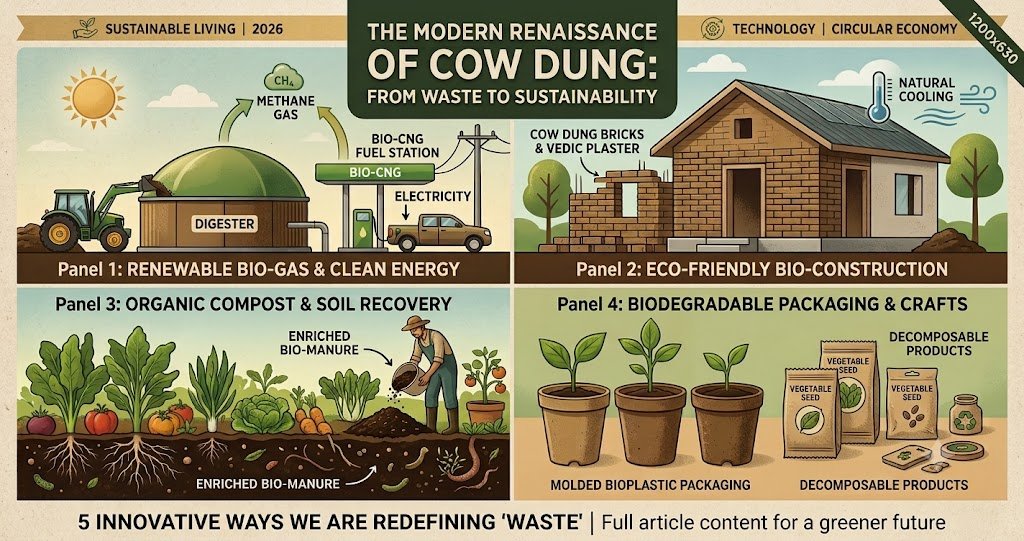
This is one of those topics where the basics matter more than any advanced trick. From soil health to clean energy — a research-backed look at why cow dung remains one of agriculture's most valuable natural resources.
In this guide to 15 surprising benefits of cow dung for sustainable living, we break down the practical detail — what works, what commonly goes wrong, and how to get started regardless of the scale you're working at.
Why Cow Dung Uses Matters
Cow Dung Uses is one of the areas where traditional know-how and modern soil science actually agree on most of the fundamentals.
Key Findings and Practical Takeaways
- Pairing this with a basic soil test, where practical, makes it much easier to judge what's actually working.
- Storage conditions before use affect nutrient retention nearly as much as the initial quality of the material itself.
- The most consistent results tend to come from smaller, more frequent applications rather than one large seasonal dose.
- Local climate and existing soil composition shift the ideal approach more than any single generic ratio can capture.
Patience is the one ingredient no amount of technique can substitute for.
Common Mistakes to Avoid
- Using contaminated source material without any screening, risking pathogen or weed-seed transfer.
- Neglecting to test soil conditions beforehand, so it's unclear whether the intervention actually helped.
- Rushing the process to save time, which often extends total time needed due to failed or incomplete results.
Practical Tips for Getting Started
- Compare your results against a small untreated control area, so you can genuinely tell what changed and what didn't.
- Choose a consistent location with reasonable drainage and airflow before you begin, rather than adjusting mid-process.
- Label and date anything you store, since it's easy to lose track of what's ready and what still needs time.
Frequently Asked Questions
Is 15 surprising benefits of cow dung for sustainable living suitable for beginners?
Yes — this is one of the more accessible methods covered on this site, with a low barrier to getting started.
How long before I see results?
Results build gradually; expect early signs within several weeks and more meaningful change over the following months.
Can this be done on a small, home scale?
Yes, it adapts well to smaller setups. Just scale the quantities proportionally to the space you're working with.
Cow dung's versatility — as fuel, fertilizer, building material and now eco-product base — is exactly why it remains relevant in a modern sustainability conversation, not despite its age but because of it. Over a full season, the cumulative effect of doing this consistently tends to matter more than any single application.
Advertisement
Related Articles