15 Surprising Benefits of Cow Dung for Sustainable Living
From soil health to clean energy — a research-backed look at why cow dung remains one of agriculture's most valuable natural resources.
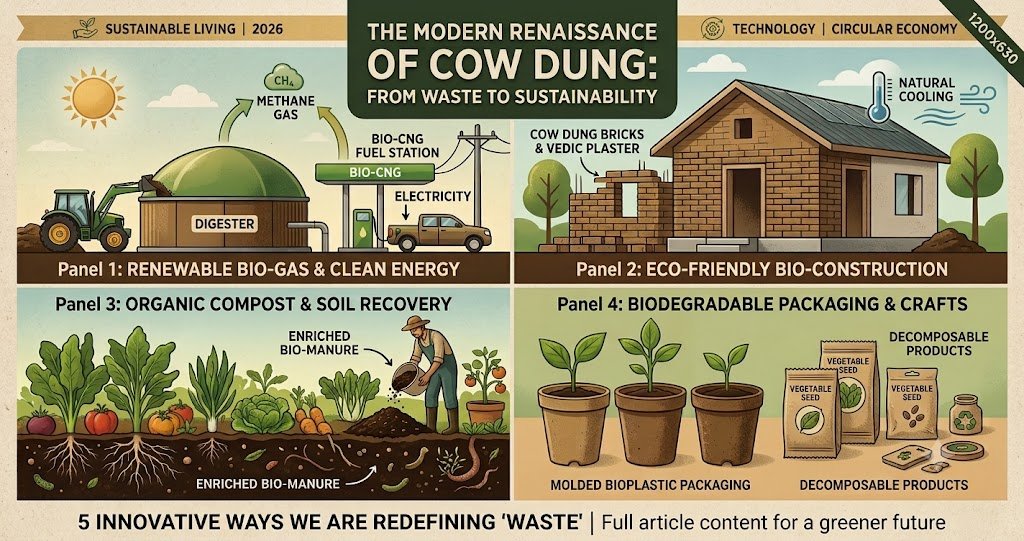
For centuries, cow dung was primarily viewed as a simple agricultural byproduct or traditional cooking fuel. However, with the growing global push toward carbon neutrality and zero-waste circular economies, cow dung has emerged as a high-value resource in sustainable technology, eco-construction, and clean energy.
One of the most impactful modern applications of cow dung is bio-methanation. Through anaerobic digestion, cattle manure is transformed into purified Compressed Bio-Gas (CBG) with up to 98% methane content. This clean energy alternative powers vehicles, generates electricity, and replaces fossil fuels in industrial applications, while significantly reducing greenhouse gas emissions.
The green building sector has actively adopted cow dung as an eco-friendly binder and insulation material. When processed into Vedic plaster mixes, bio-tiles, or sun-dried bricks, cow dung offers remarkable thermal comfort by keeping indoor spaces naturally cool during hot seasons and warm during cold weather.
Modern eco-resorts and bio-architecture projects utilize refined cow-dung wall plasters for their natural insulation properties. Studies indicate that dung-and-lime plaster blends effectively absorb humidity, suppress harmful bacteria, and reduce indoor ambient temperatures without reliance on energy-intensive air conditioning systems.
Chemical runoff and topsoil degradation have accelerated the shift back to organic soil conditioners. Digestate—the nutrient-rich slurry left behind after biogas extraction—contains essential nitrogen, phosphorus, and potassium. Organic farming operations rely on this bio-manure to restore soil microbiomes and retain soil moisture naturally.
To curb single-use plastic consumption, manufacturers are processing dried cow dung fiber into molded eco-packaging, biodegradable pots, and tableware. These products naturally decompose into nutrient-rich soil after use, leaving zero toxic microplastics behind.
"Cow dung is no longer just farm waste; it is a foundational material for sustainable energy, carbon-neutral architecture, and circular agriculture."

From soil health to clean energy — a research-backed look at why cow dung remains one of agriculture's most valuable natural resources.

A practical, beginner-friendly walkthrough for turning cow dung into rich, ready-to-use compost in six to eight weeks.

Everything you need to plan, size and install a small-scale biogas digester for a household or smallholding.